Hook Shapes That Work, Whatever You Make
The opening line decides whether anyone sees the rest. Here are the hook shapes that keep working — with examples for apps, SaaS, local businesses and newsletters.
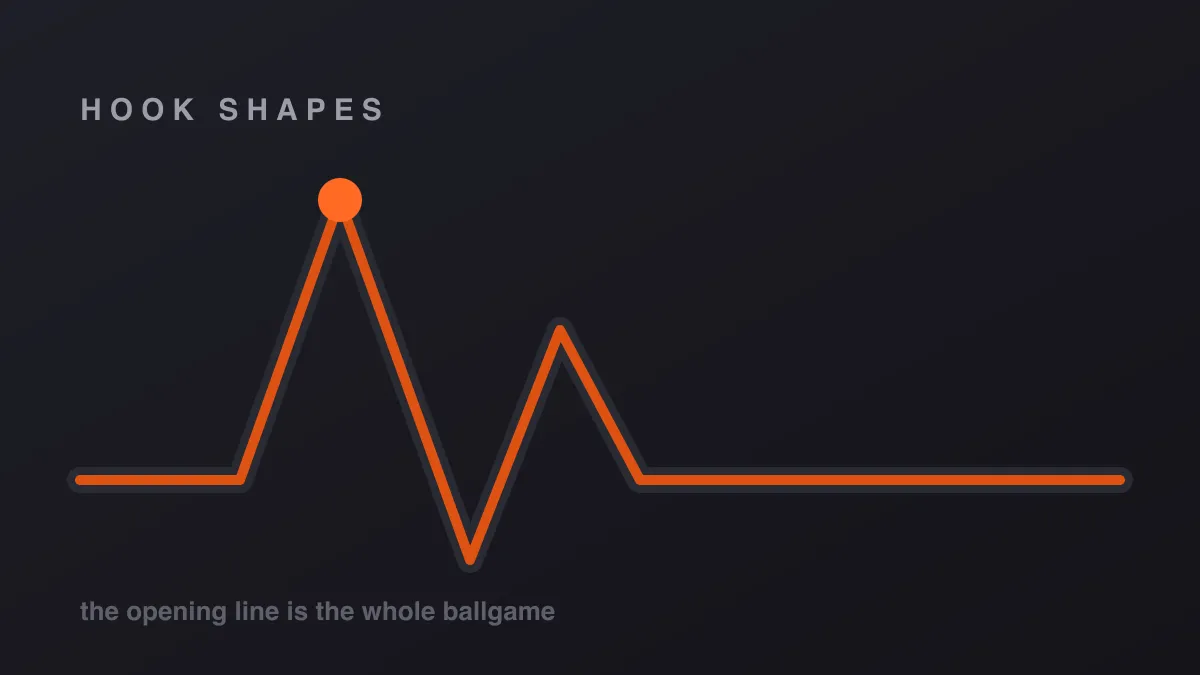
Every short-form post lives or dies in its first line. Not the video quality, not the edit, not the hashtags — the hook. The feed gives you about one second of a stranger’s attention, and the opening line is the only thing negotiating for more.
The good news: hooks aren’t magic, they’re shapes. A handful of structures keep working across every platform and every kind of product, because they map to how people actually decide to keep watching. Learn the shapes and you can write a dozen usable hooks in the time it used to take to agonise over one.
Here are the shapes we see work, with examples for four very different kinds of product. The examples are illustrative — written to show the shape, not lifted from real accounts.
The shapes
The relatable pain-point. Name the exact annoying moment your audience lives with. No product mention, no solution yet — just proof you know the feeling. The comment section fills with “this is me,” and that engagement is what the algorithm feeds on.
Time saved, made concrete. Not “save time” — a specific before and after with real units. Minutes are believable; “10x” is wallpaper.
The founder reason. Why this exists, told like a confession. It converts because it’s unfakeable — nobody else can say it.
Myth-busting. Take the standard advice in your niche and disagree with it, specifically. Mild controversy earns the pause; the payoff must actually deliver.
Before / after. The oldest shape there is, because transformation is the only story anyone has ever wanted.
The shapes, applied
Mobile apps
- Relatable pain-point: “i have 47 apps on my phone and this is the only one that’s changed an actual habit”
- Time saved: “the 20 minutes i used to spend on this every morning now takes one tap. i don’t think about it anymore”
- Founder reason: “i built this because every app in this category assumed i had discipline. i don’t. that’s the point”
SaaS
- Myth-busting: “you don’t need another dashboard. you need the one number that tells you what to fix this week”
- Before / after: “our onboarding was 11 steps. we cut it to 3 and stopped losing half our signups on day one”
- Relatable pain-point: “the tool your team actually opens beats the tool with more features. every single time”
Local businesses
- Behind the scenes: “6am at the bakery. here’s what gets made before you’ve hit snooze twice”
- Local pride: “people drive past three chains to get here. there’s a reason, and it’s not the parking”
- Feature spotlight: “we started taking bookings by message because you told us the phone queue was the worst part”
Newsletters
- Curation promise: “i read 40 articles this week so you get the 5 worth your commute”
- Contrarian: “most industry news is noise wearing a headline. here’s how to tell the difference in ten seconds”
- Social proof shape: “the reply i get most: ‘this is the only email i actually open on mondays‘“
What makes these work
Look at what every example has in common. Lowercase, spoken rhythm — they read like a person talking, not a brand announcing. Specific numbers where numbers exist (47 apps, 11 steps, 6am) and none where they don’t. And not one of them opens with the product’s name — the product arrives after the feeling has done its work.
The mistake most builders make isn’t writing bad hooks. It’s writing one hook per idea, treating it as precious, and burning an evening on it. Hooks are a volume game: write eight, post the best, let the results tell you which shape your audience actually responds to.
Or don’t write them at all
This is the part where we mention that writing hooks is literally what ShoutSmith does — it reads your product’s page and writes hooks in these shapes, for your audience, in about two minutes.
If you want to see what that looks like for your product before signing up for anything: join the waitlist and add your link — your first hooks are emailed to you free, generated from your own page. No card, no call. Judge the shapes for yourself.